
Homebase is an all-in-one workforce management platform built for small businesses with hourly teams—scheduling, time tracking, payroll, and HR in one place. It sits at the messy intersection of “real work” and “real life,” where managers are moving fast, employees are on mobile, and compliance can’t be an afterthought. My work there focused on making complex operational workflows feel simple, trustworthy, and scalable.
Employee onboarding case study
Fixing Onboarding Drop-Off by Rebuilding the System Underneath It
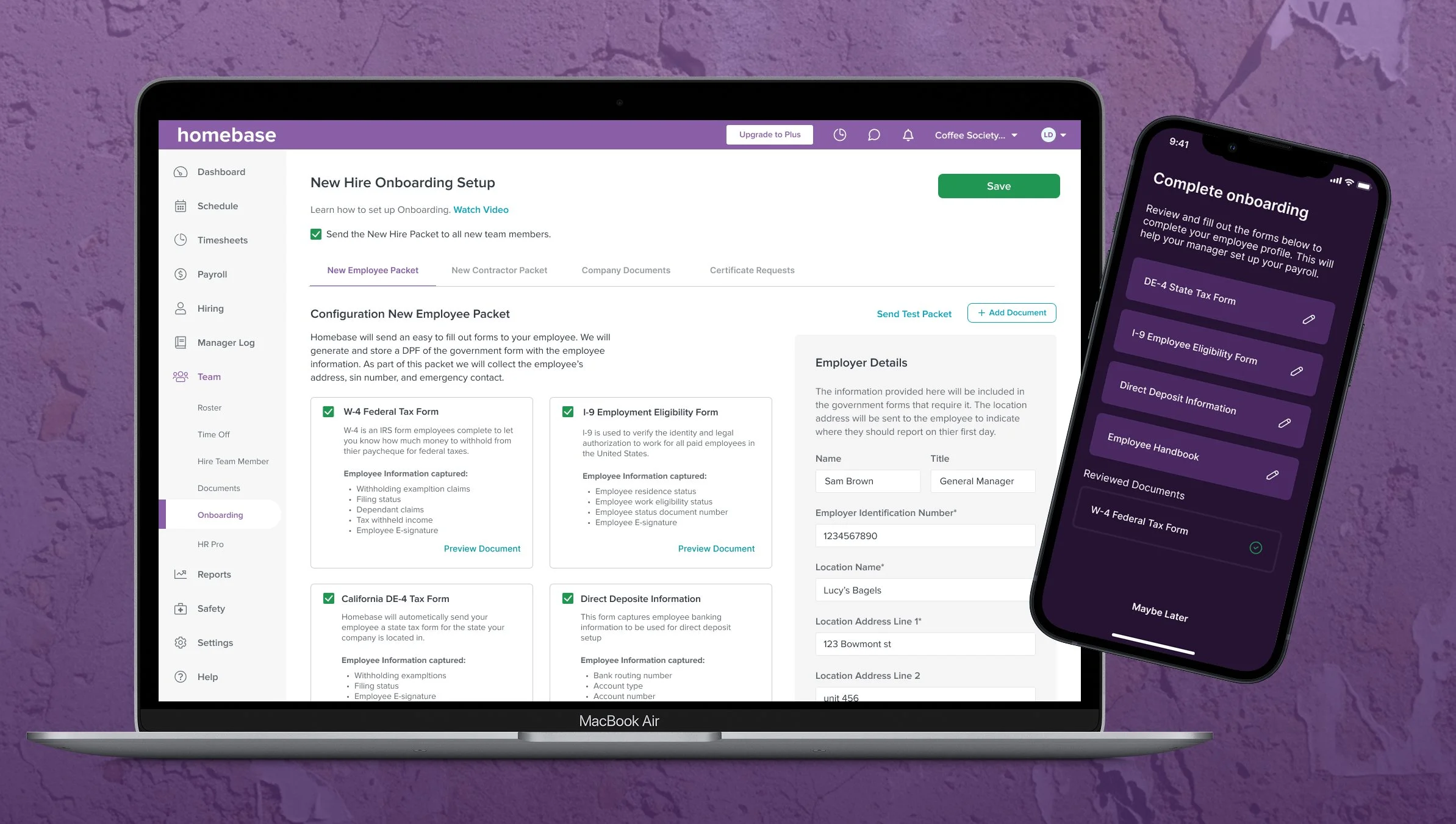
On paper, onboarding is “just forms.” In practice, it’s the gate between a new hire and their first shift—getting paid correctly, staying compliant, and not becoming a day-one fire drill for managers. When we found only 28% of employees were completing onboarding packets, we realized the real issue wasn’t a confusing screen—it was a broken ecosystem pushing the workflow offline (texts, email, paper, workarounds). I partnered closely with Product, Engineering, and Compliance to reframe onboarding as a structured workflow: separating sensitive vs shareable documents, rebuilding permissions and state logic, and redesigning mobile-first completion with clear progress and reliable save/resume. The result was a scalable foundation for onboarding that matched how managers actually hire and how employees actually finish.
View case study →
Information architecture case study
Reducing Exceptions, Restoring Trust: a Cleaner IA For Managers and Teams.
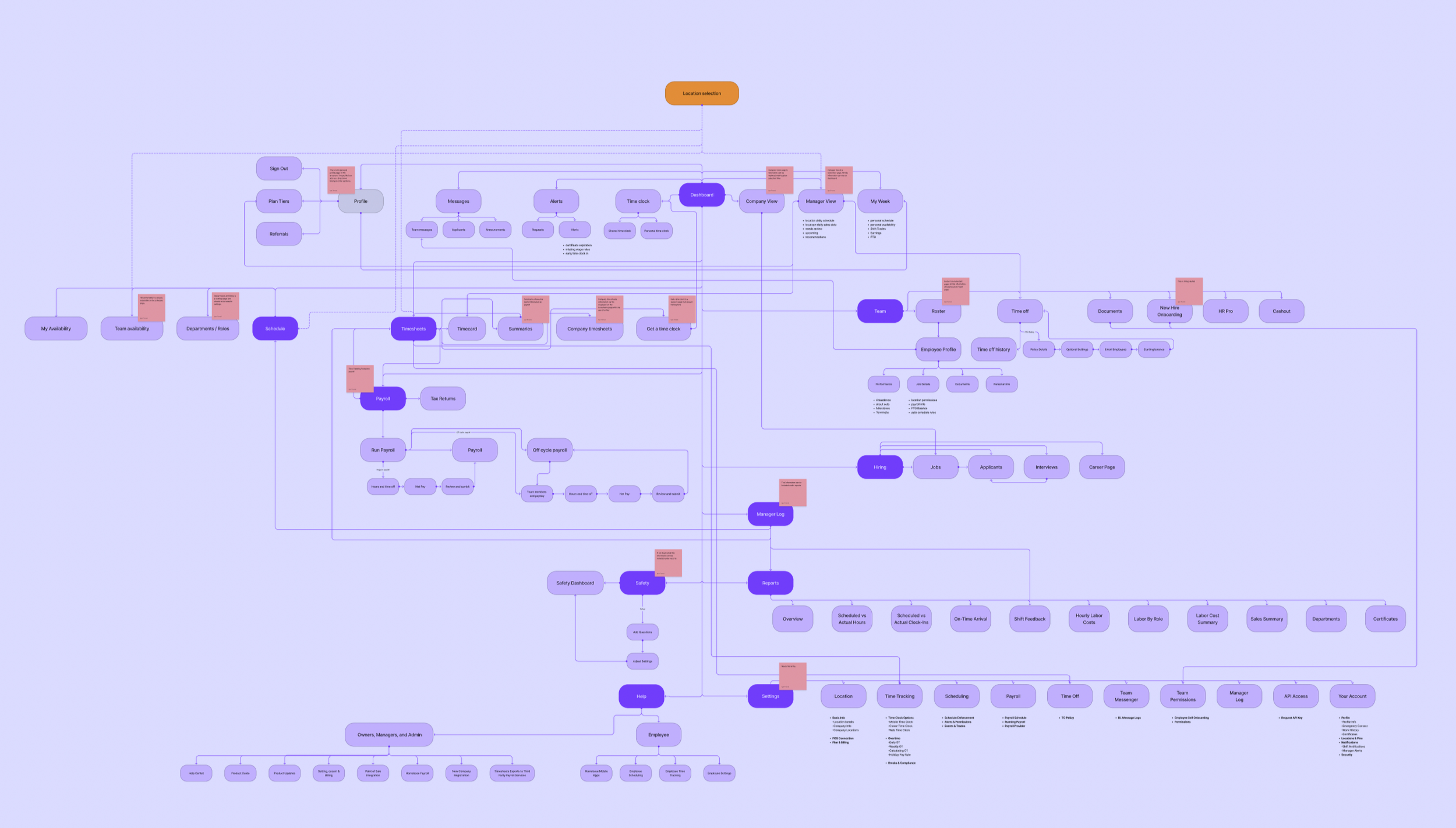
Homebase serves two very different brains: managers running operations at speed, and hourly employees just trying to answer “what’s next?” Over time, the navigation drifted as features shipped—labels got inconsistent, key tasks scattered, and switching between manager/employee contexts created constant “wait…where am I?” moments. I led the IA strategy end-to-end—workshops, task mapping, sitemaps, wireframes, and tree testing—to propose a structure that made context unmissable (role + scope), shortened paths to high-frequency actions, and reduced the location-based exceptions that quietly broke trust. Even though the work was deprioritized before build, it produced a clear, test-backed direction the org could return to when timing was right.