
DF intro to worker insights dashboard
Employee Availability Management
Redesigning how hourly workers set, manage, and understand their availability inside an enterprise scheduling platform used by millions.

Availability management is one of those things that sounds simple until you watch someone actually do it. An employee needs to tell their employer when they can work. That's the whole requirement. But inside an enterprise scheduling platform serving retail, hospitality, healthcare, and logistics — where eligibility rules, multi-location assignments, overtime caps, and approval chains all intersect — "tell us when you're available" turns into a surprisingly painful experience.
Attendance
Reducing Exceptions, Restoring Trust: a Cleaner IA For Managers and Teams.
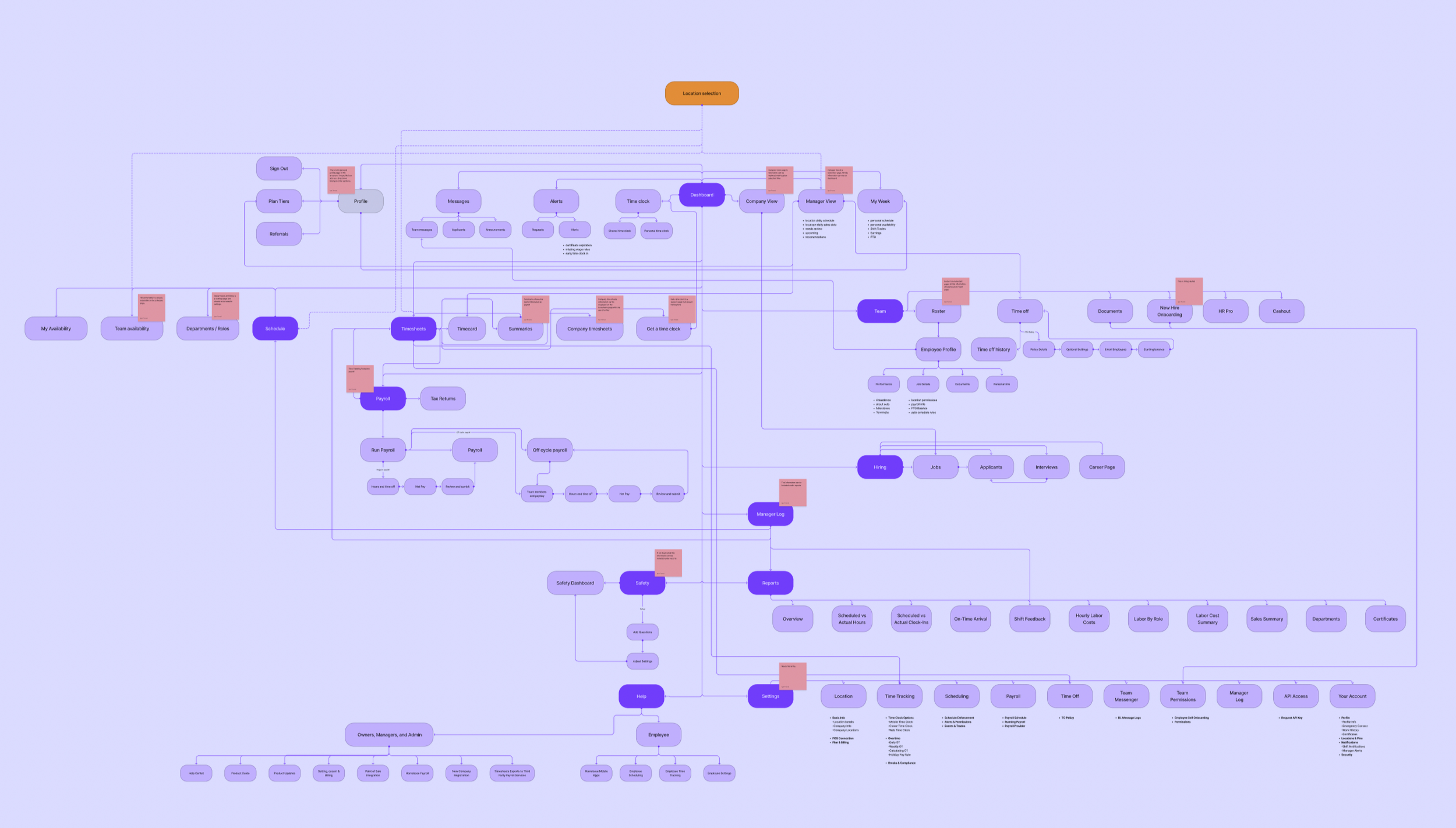
Homebase serves two very different brains: managers running operations at speed, and hourly employees just trying to answer “what’s next?” Over time, the navigation drifted as features shipped—labels got inconsistent, key tasks scattered, and switching between manager/employee contexts created constant “wait…where am I?” moments. I led the IA strategy end-to-end—workshops, task mapping, sitemaps, wireframes, and tree testing—to propose a structure that made context unmissable (role + scope), shortened paths to high-frequency actions, and reduced the location-based exceptions that quietly broke trust. Even though the work was deprioritized before build, it produced a clear, test-backed direction the org could return to when timing was right.
Shift actions
Redesigning how hourly workers set, manage, and understand their availability inside an enterprise scheduling platform used by millions.
Homebase serves two very different brains: managers running operations at speed, and hourly employees just trying to answer “what’s next?” Over time, the navigation drifted as features shipped—labels got inconsistent, key tasks scattered, and switching between manager/employee contexts created constant “wait…where am I?” moments. I led the IA strategy end-to-end—workshops, task mapping, sitemaps, wireframes, and tree testing—to propose a structure that made context unmissable (role + scope), shortened paths to high-frequency actions, and reduced the location-based exceptions that quietly broke trust. Even though the work was deprioritized before build, it produced a clear, test-backed direction the org could return to when timing was right.